Pages

Thursday, June 30, 2011

Where to Get Appropriate Text for K-1 Bookmaking

* Innovations of shared reading material.
* Reproducible emergent readers from resource books
*Traditional poems, songs, rhymes, and chants
* Adaptations of emergent readers
* Download free books from the internet.

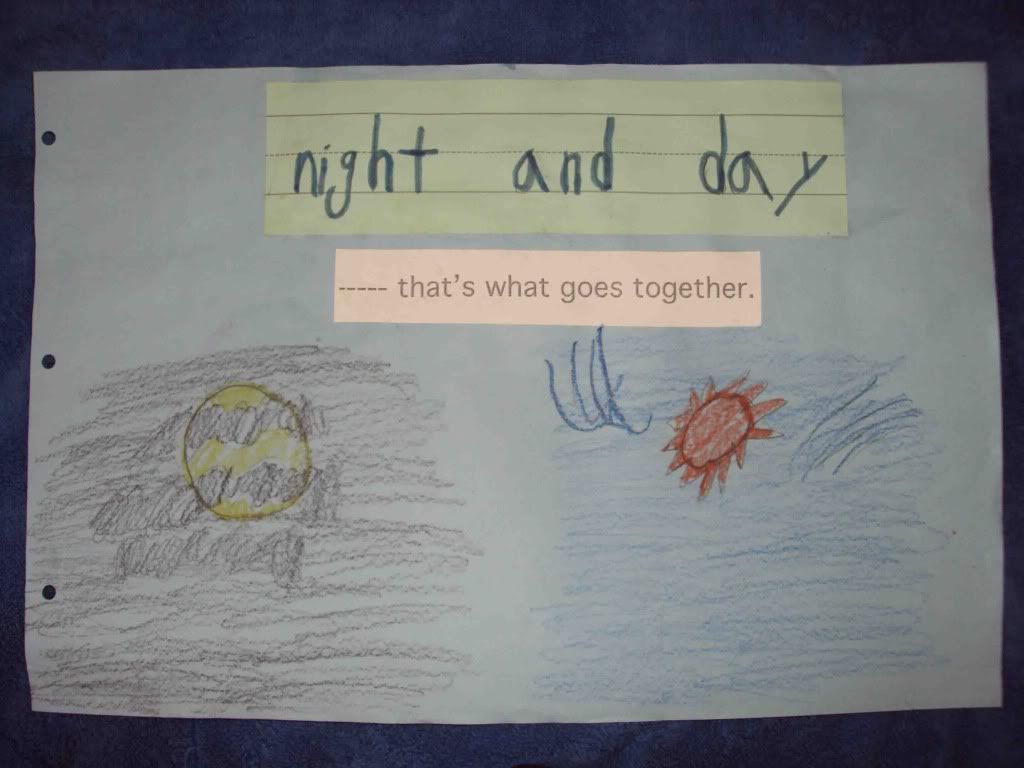
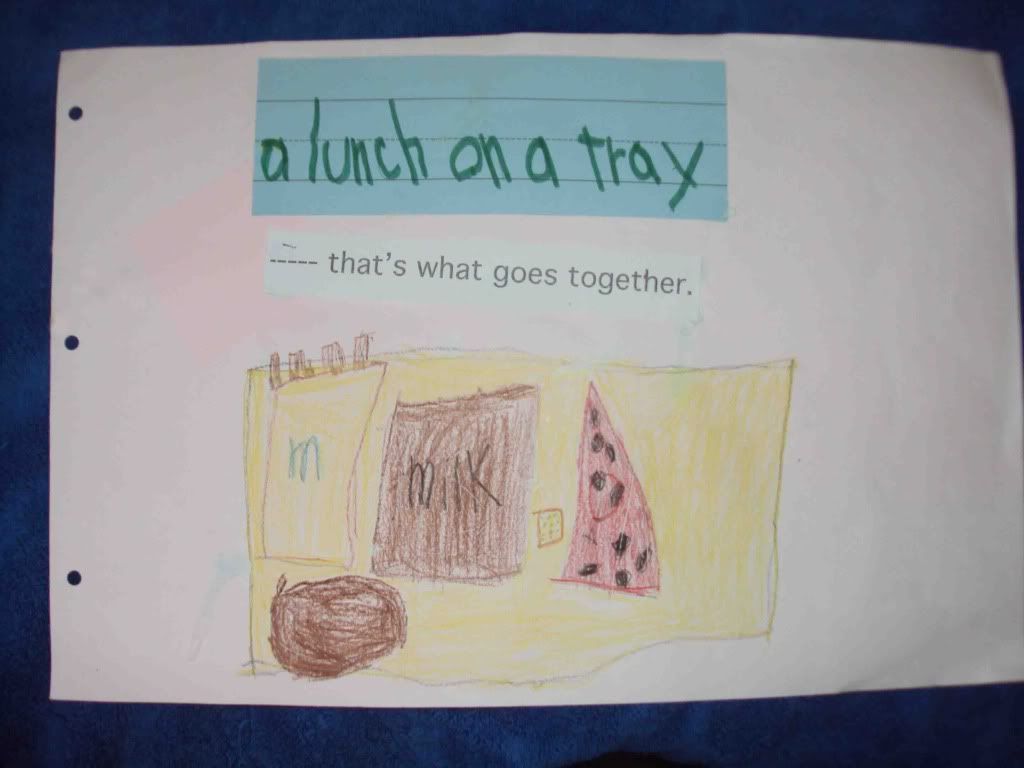
For your book-making pleasure, here is a great idea for a class book based on my book below, What Goes Together?

 
What goes together?
June Swinney, a 1st grade teacher, made this class book with her students. First she read aloud several books with the theme of catagories or things that go together. Then the class brainstormed a long long list of paired objects. From that list they created rhyming couplets. Pairs of students created and illustrated each page of the class Big Book. Adorable!


Friday, June 3, 2011

When is a Good Time to Make Books with K-1 Kids?

When is a Good Time
to Make Books
with K-1 Kids?  
Finding time to make books with your beginning readers can be a challenge.
Here are some good times to keep in mind:
  •  As a learning center activity
  •  Homework
  • When parent volunteers are available (Coordinate this with center time.)
  •  Time with upper grade buddies
If you have other suggestions for how to find time for book-making,
please let me know and I"ll post your ideas!

Here is one of my favorite Cat and Dog books,
with a cool book-making activity that you can download for free. This fun book fits with a social studies theme of "needs vs. wants."
Good Choices for Cat and Dog
Book Making!
                                            
Click the images above to download!
                    

Saturday, April 16, 2011

Why Make Books with K-1 Kids?

Here some great reasons to use valuable school time making books:
  • Supply extra reading at school. Beginning readers needs lots and lots of easy to read books to practice reading and rereading.
  • Integrate reading in the content areas. There are many book-making resources that feature science, social studies, and math themes.
  • Practice reading sight words in context.
  • Create a supply of reading material for home. After spending some time in the students' book boxes at school, you can send the books home for extra practice. Many K-1 teachers make a home book box at Back to School night and emphasize that the books sent home be placed in the box for home reading.
  • Extend reading practice beyond the school day and through summer vacation. This is a great way to avoid "summer fall-out!"

Below, you can download a fun book-making activity that goes with this Itty Bitty Phonics Reader.


You can copy the bear shape on colored card stock and stick on wiggly eyes, bows, hat, etc. This book practices initial consonant /b/. You can invite your child to glue items to each page such as a button, bow, bean, etc.


Click image to download
this reproducible.


My next blog: When is a good time to make books?

Monday, April 11, 2011

Bookmaking with K-1 Kids

Welcome to one of my favorite topics--making books with beginning readers. In my next series of blog postings, I will be sharing my ideas on the Whats, Whys, Hows, and Whens of making take-home books with children just learning to read and write. I'll be sharing my creative ideas, some free-downloadables, as well as linking you up with some valuable resources.

But to start you off, here are 2 fun and easy books to download.

For the book "Bugs," children  just color the pages to match the text and complete page 4 with a color word and matching bug. Then cut the 4 pages apart, and staple them together with a fun cover made from construction paper or card stock. I used to bug stickers to decorate the cover, but having kids draw and color their own would be better yet.

blog


Here is a simple "flip' book. Cut out the top strip and glue it to a piece of construction paper. Then cut out the color words/pictures and staple them as shown. Children repeat reading "I see . . . " and flip the pages to read different color words.

PhotobucketPhotobucket


Monday, March 28, 2011

Getting Set for Writer's Workshop


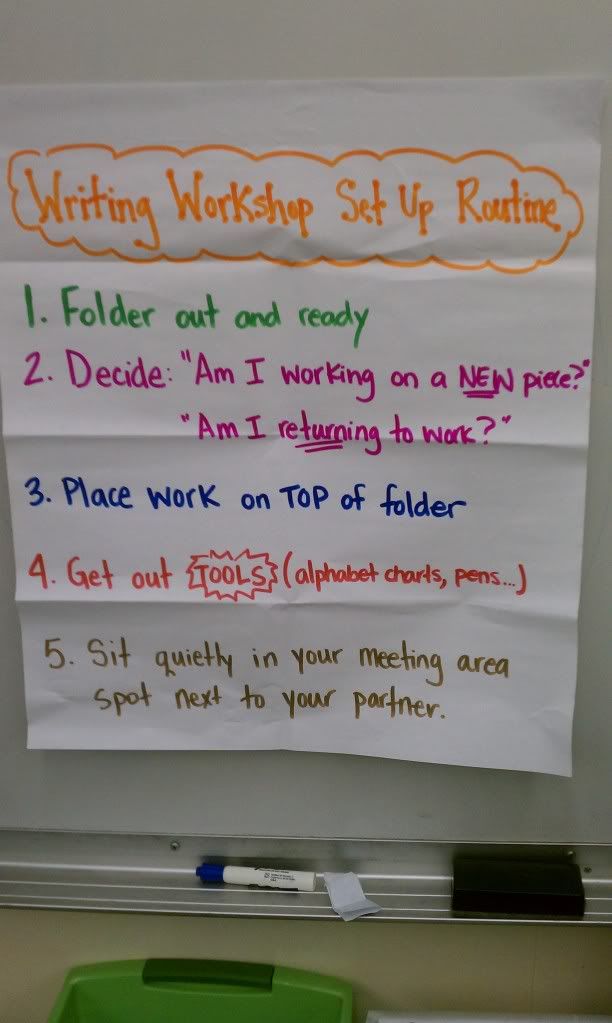
Above is one more photo I'd like to share with you from my recent visit to a 2nd grade Writing Workshop in action. Consultant Renee Houser from Growing Educators, who was working with students, tacked up this poster. The set-up routine gets young writers ready, puts them in the right mind-set, and helps them focus on what they will be working on. I love the way this routine sets the expectation that serious writing will be taking place in this session! 

Here's more from Renee Houser's hand-out:
Create rituals and routines around notebook work
 such as:
 *  At the beginning of every writer's workshop, have students edit at least one entry as they sit and wait
for classmates to settle in the meeting area before the mini-lesson begins.

 *  Interrupt students in the middle of the independent work time and challenge them to accomplish a 'quick edit' (you might want to focus each quick edit for something specific each time such as: end marks, capitalization, word wall words, etc.).

*  Provide time for students to reflect on their own note-booking. Perhaps they share their reflections and goals with their partners. Example: I date each entry. I fill the page margin to margin with my writing. I use my writing notebook only for writing. I tend to use  ____  as a strategy because ____ . 

*   Building time during a 1:1 conference to invite students to share their notebook work and goals.

*   Establishing some non-negotiables for notebooks such as:  All entries are dated. Writing should be from margin to margin, etc.
Next, I will be blogging on one of my favorite subjects:
Book-making with beginning readers and writers. Stay tuned!

Monday, March 21, 2011

Becoming an independent writer. . .

As a continuation of my previous blog posting, I'd like to share some ideas
from writing consultant Renee Houser: 

"We can live wide-awake writerly lives and capture these moments in our writing notebooks by: 
  •  Writing about things that matter to you, you feel strongly about or perhaps want others to change or think about. . . let your voice be heard!
  • Searching for an object on your body or in your surroundings that may spark a memory
  • Time-lining part of your day
  • Observing people, places, sounds. . .
  • Collecting words, phrases, or parts of texts
  • Rereading old entries and find more to say
  • Rereading old entries in a way that it sparks a new or different memory
  • Sketching a place and then write about it
  • Making a list of things you want to write about, pick one and start writing
  • Being inspired by photographs or artifacts
  • Making a list of questions or wonderings and then search for answers or other questions and thoughts
  • Saying it better. . . reread an entry and find a line or phrase you think you wrote well and write it again, better, clearer . . . "
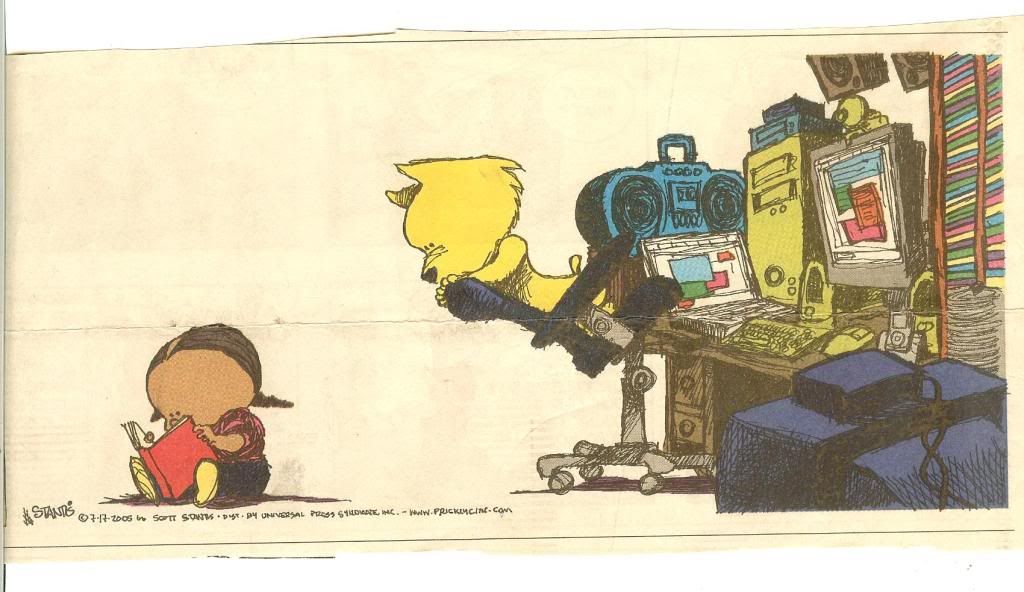
If beginner writers follow the guidelines above, they won't find themselves in the predicament Cat does in my book, Cat Can't Write.

                     Click here to read the book about Cat